
Choosing the best time to visit Shinsekai
The best time to visit Shinsekai for a walking-focused visit is, by inference from Osaka temperature averages, April or May and October or November. These months are milder than July and August in the Japan Meteorological Agency climate normals. This is a planning recommendation drawn from the figures, rather than an official ranking or a forecast for the day you arrive. Your preference for daytime streets, evening lights or observation decks will also shape the choice.
The figures here describe Osaka over the reference period 1991 to 2020. They help compare seasons, while the local forecast helps organise an actual day. Use the transport guide to plan your station approach, and keep outdoor walking separate from the admission arrangements for a tower or museum. Clear views and dry evenings depend on the conditions on your visit date.
Reading the Osaka monthly climate table
The high and low columns are monthly means of daily maximum and minimum temperatures. They are not the hottest and coldest temperatures ever recorded in that month. The rainfall column is the mean monthly total, rather than the amount expected on a particular day or the number of wet days. Keeping these definitions in mind makes the table useful for comparing seasons without reading it as a daily weather report.
June has the highest mean monthly rainfall in this table. July and August have higher temperature averages than the spring and autumn months suggested for walking. These comparisons can guide how much outdoor time you want to plan, but they do not tell you which hour will be dry. Keep a shorter route available alongside a longer walk through the streets and park area.
Osaka climate normals by month
| Month | Mean daily high °C | Mean daily low °C | Mean monthly rainfall mm |
|---|---|---|---|
| January | 9.7 | 3.0 | 47.0 |
| February | 10.5 | 3.2 | 60.5 |
| March | 14.2 | 6.0 | 103.1 |
| April | 19.9 | 10.9 | 101.9 |
| May | 24.9 | 16.0 | 136.5 |
| June | 28.0 | 20.3 | 185.1 |
| July | 31.8 | 24.6 | 174.4 |
| August | 33.7 | 25.8 | 113.0 |
| September | 29.5 | 21.9 | 152.8 |
| October | 23.7 | 16.0 | 136.0 |
| November | 17.8 | 10.2 | 72.5 |
| December | 12.3 | 5.3 | 55.5 |
An observatory visit
Harukas 300 admission is valid on your selected visit date.
Hand-picked tours, booked through GetYourGuide. Prices are indicative starting prices in US dollars (as of October 2026). Tap a tour for live availability and the current price in your currency.
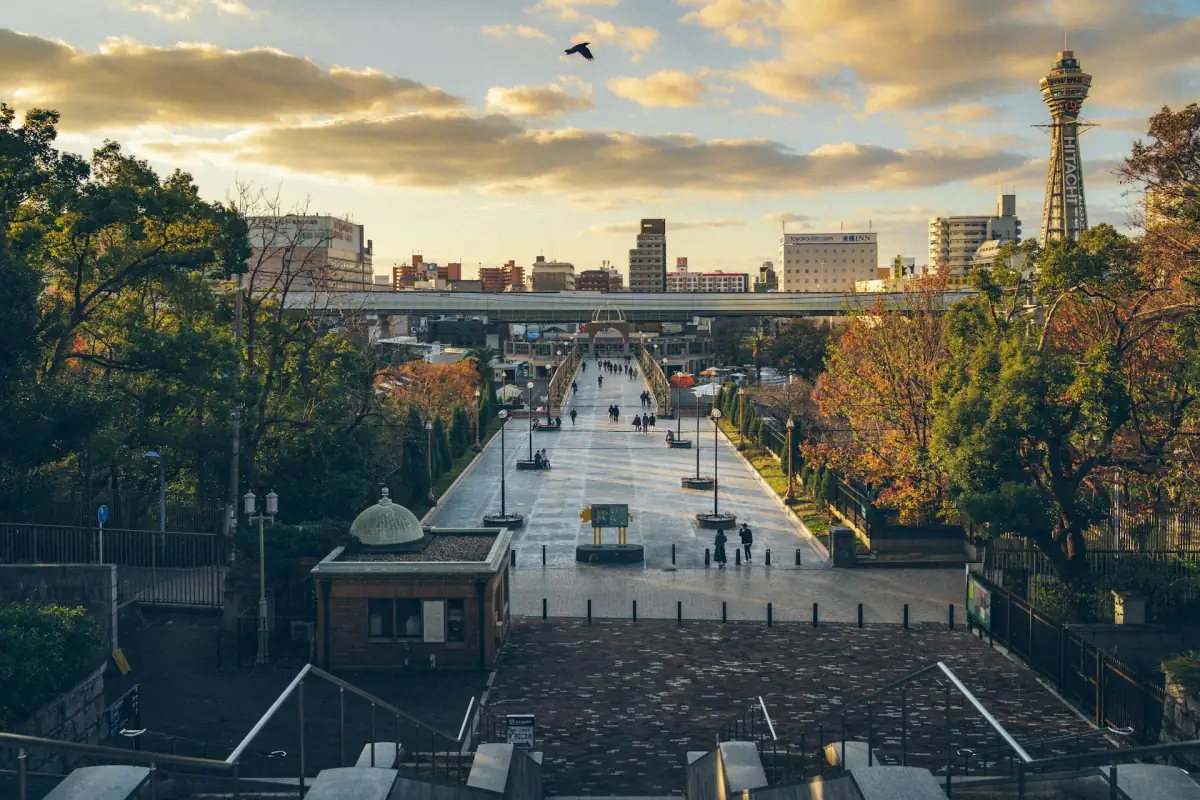
Harukas 300 observation admission
Add an observation-deck visit at Abeno Harukas on your chosen date. The ticket covers the observatory; visibility depends on the weather and the art museum has separate admission.
Daytime walks, evening streets and tower visits
A daytime route can focus on the streets of Shinsekai and the Tennoji park area, while an evening plan gives more attention to the illuminated streets. Choose the amount of outdoor walking according to the forecast and your own comfort with the temperatures. The Shinsekai evening guide covers the night-time focus; the Tennoji and history page gives context for the park and temple side.
Tsutenkaku requires an admission-time reservation. Its outdoor deck is accessed together with the general observatory, and rain, wind or fog can cause closure. Avoid making an outdoor platform the sole reason for a fixed walking plan. The Tsutenkaku visitor guide separates the observation areas and activity options so that each part of the visit can be planned on its own terms.
Harukas 300 is another observation option. Its standard ticket does not allow re-entry, so arrange other stops around one visit rather than repeated returns. The listed one-day validity of the featured admission means the selected visit date; it is not a guided day-long programme. Read the Abeno Harukas guide for the distinction between the deck and art museum. Neither a ticket nor a season guarantees a sunset view.
Spring blossom and autumn colour: dates with context
The Osaka cherry blossom normal is 27 March for the start of flowering and 4 April for full bloom. The observed dates in 2026 were 26 March and 3 April. These are station and reference-tree observations, rather than an identical timetable for every tree in Tennoji Park. Treat them as seasonal context when choosing travel dates, not as a reservation window for future blossom.
For autumn, the JMA normal dates are 22 November for ginkgo yellowing and 1 December for maple reddening. These are also historical seasonal reference values. They do not fix the colour of every tree along your walk. Choose a route you would enjoy for its streets, gardens or buildings, then let the conditions on the day decide how long you spend outside.
Questions about seasons and weather
Are the table figures a forecast for Shinsekai?
They are JMA Osaka climate normals for 1991 to 2020. The temperature columns describe monthly means and the rain column describes mean monthly totals. Use a current forecast to organise the actual walking day.
Which months are milder for walking?
April, May, October and November are milder than July and August by comparison of the temperature averages. This is a recommendation inferred from the table, with your own preferences still deciding the right season.
Does Harukas admission guarantee a clear view?
Visibility depends on the weather. The featured ticket includes observatory admission on the selected date; the art museum is a separate visit. Plan the deck as one part of the day alongside streets or other individual attractions.